

we open the doors to the homes and offices of our collectors—spaces where art lives, works, and tells a story.
We showcase carefully curated works sold by Chelsea Art Group, revealing how our clients’ taste and lifestyle transform everyday environments into personal art sanctuaries.
This week, we proudly assembled a European corporate collection. We curated a remarkable personal selection for one of the principals, who sought to share his passion for art with those working and visiting his company. The organization primarily operates in Spain and Portugal, and the artwork features a collection of artists hailing from those countries or those who engage with the landscapes of these regions.
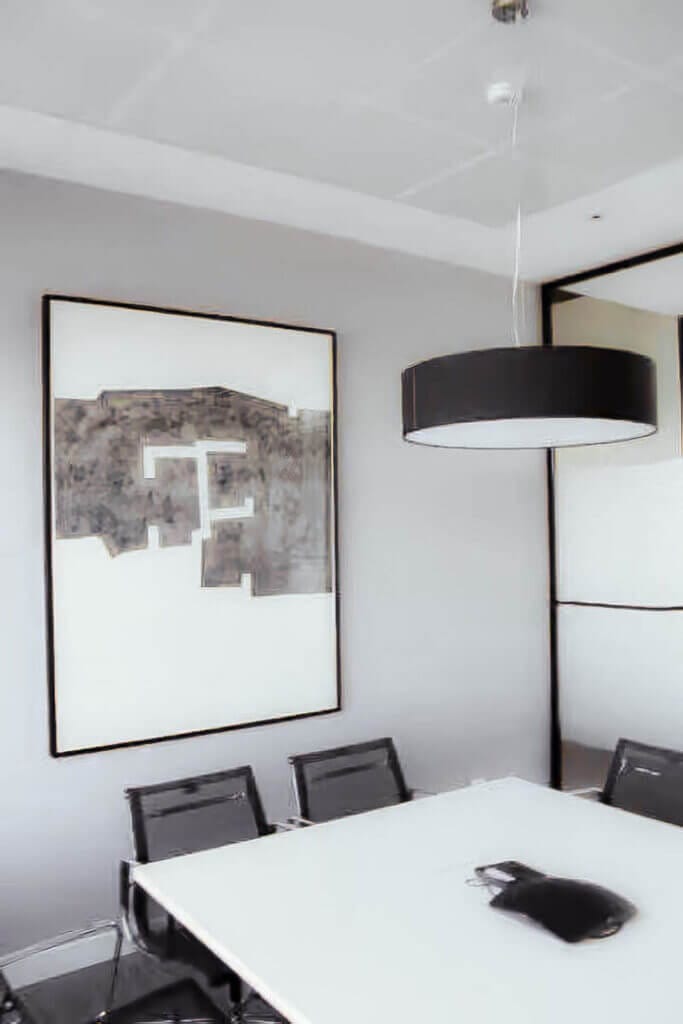
Eduardo Chillida
Eduardo Chillida stands as one of the most significant sculptors of the twentieth century, renowned for a body of work that bridges sculpture, architecture, philosophy, and landscape. Born in the Basque coastal city of San Sebastián, Chillida initially pursued architecture before turning decisively toward sculpture—an early shift that nonetheless left a permanent architectural sensibility in his work.
Chillida’s graphic works—etchings, lithographs, woodcuts, and collages—extend his sculptural thinking onto paper. Rather than functioning as preparatory sketches, these works operate as autonomous investigations of space, weight, and limit. Dense blacks press against expanses of white, lines behave as forces rather than contours, and voids are treated as active, resonant forms. His prints often echo the structural logic of iron sculpture, translating mass and tension into graphic terms while embracing restraint, silence, and balance. The result is a body of work that is spare, rigorous, and unmistakably sculptural in spirit.

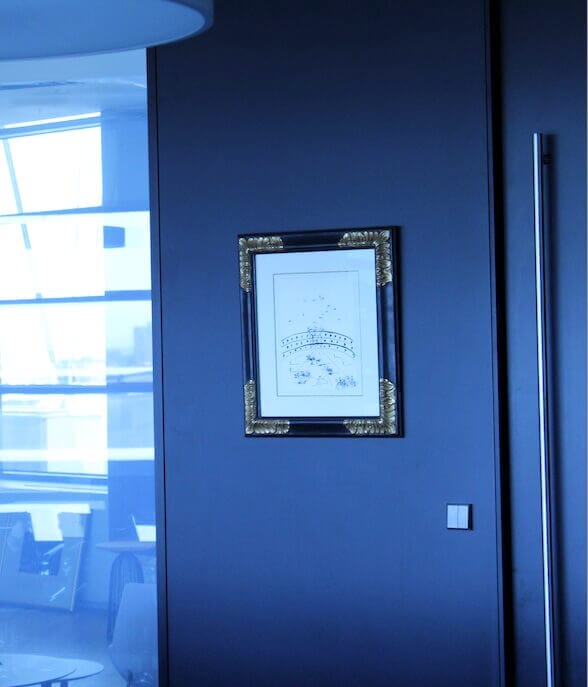
Salvadore Dali
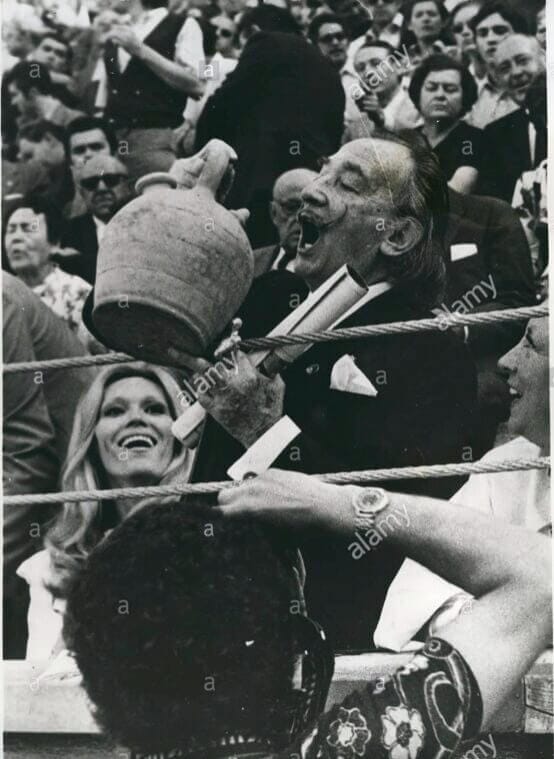
Dalí was obsessed with Spanish culture, and bullfighting was a recurring theme in his art—especially in the 1960s. He produced a series of bullfight prints and drawings under the title Tauromachie (Bullfight) These works depict the drama and violence of the corrida with Dalí’s surreal twists—shapes, contrasts, motion, and symbolic intensity.
The main bullfighting ring in Madrid Toros de Las Ventas is visible out of the window in the conference room.
Edward Burtynski
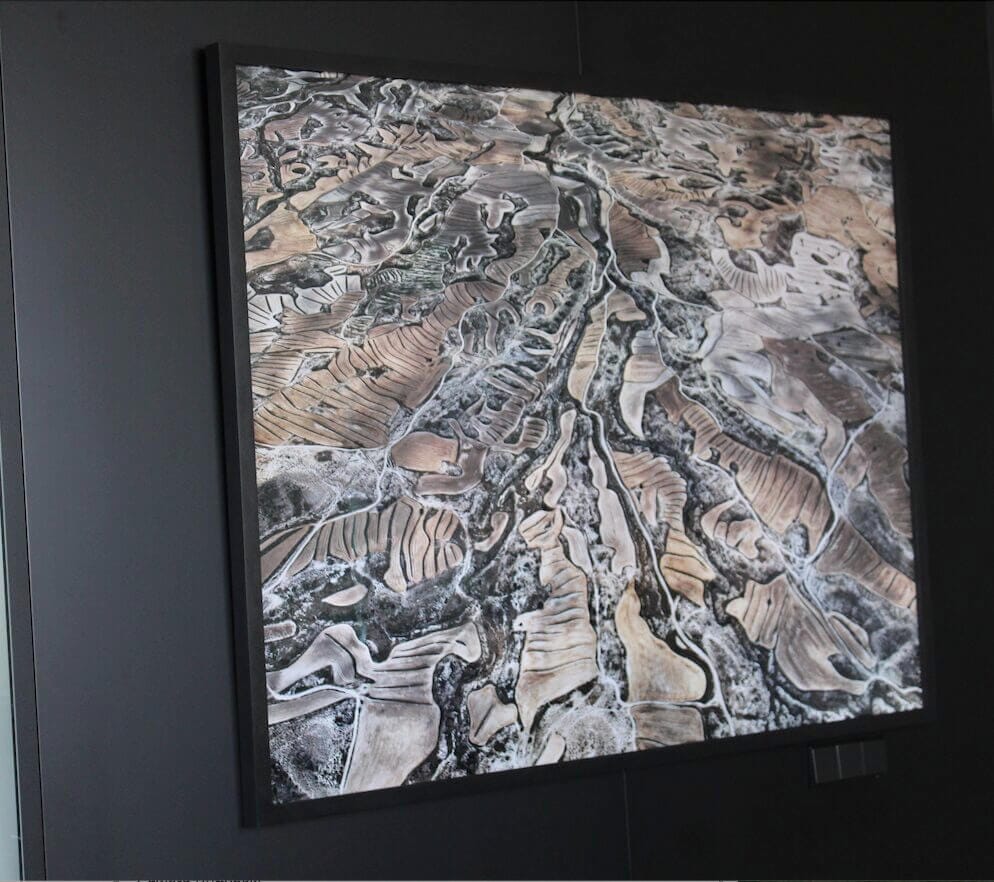
Edward Burtynsky is a distinguished Canadian photographer acclaimed for his large-scale, high-resolution images of industrial landscapes—including mines, quarries, oil fields, shipbreaking yards, factories, and the striking yet alarming consequences of human extraction.
His work occupies a critical intersection of art, ecology, capitalism, and geopolitics, inviting viewers to appreciate the beauty while simultaneously provoking deeper reflection.
The work depicted above illustrates Dryland Farming in the Monegros region, Spain
These aerial photographs portray dryland farming in the Monegros region of Aragón. This series is part of Burtynsky’s Water project, showcasing water-limited agriculture with patterns that resemble abstract art when observed from above.

Christian Voight
Christian Voigt is a talented German contemporary photographer is celebrated for his stunning, ultra-real architectural and landscape images created with large-format cameras, including his work from Las Ventas in 2016.
He was there for an exciting project, capturing the iconic arena as part of his architecture and culture series.
Here’s a fun tidbit… after we hung the photograph, someone exclaimed, “The shot was taken during the San Isidro Festival on May 2nd, 2016! The torero’s name is Iván Vicente, and the bulls were from El Tajo and La reina!” They even remembered where they were sitting!
How cool is that?

This artwork is a bronze kinetic sculpture created by the esteemed Catalan artist Xavier Corberó (1935–2017), a distinguished Spanish sculptor recognized for his monumental public works as well as smaller editions. Mr. Corberó is considered one of Catalonia’s most significant artists of the 20th century, widely acknowledged as a crucial figure in contemporary Spanish sculpture—often culturally compared to Antoni Gaudí for his substantial influence on the visual landscape of Barcelona.
Bird of Hope ranks among Corberó’s most renowned symbolic creations—an abstract representation of a bird that conveys not merely wildlife but rather an idea with wings. This piece embodies themes of ascent, resilience, and civic renewal, aligning seamlessly with Corberó’s dedication to public spaces and collective significance

Joan Miro
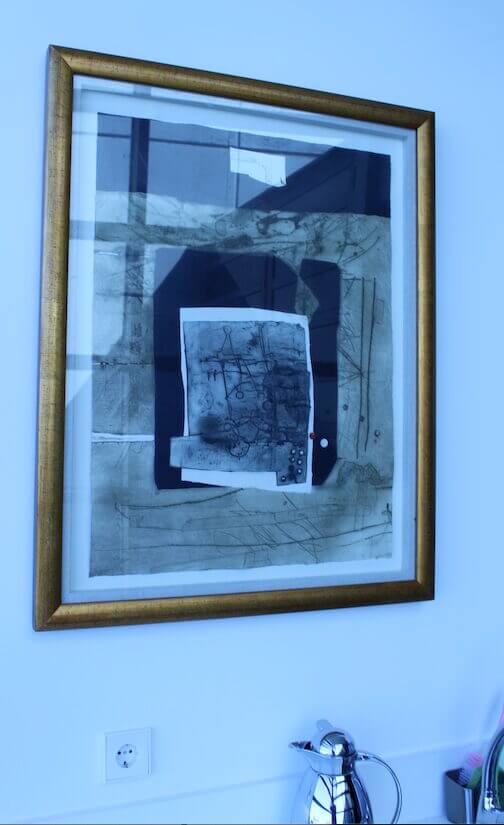
This print is part of Miró’s late-career work in graphic media. In the 1970s he produced a significant body of prints using etching, aquatint, carborundum and color — a period when he was freely combining surreal, biomorphic shapes with expressive color. The title Els Gossos (Catalan for The Dogs) refers to a thematic or series concept (dogs appear as motifs in some of his works), though Miró’s forms are highly abstract and symbolic rather than literal depictions. The piece is well-regarded within his graphic oeuvre for its bold compositional energy and use of color.

Rafael Canogar
Rafael Canogar is one of the key figures of postwar Spanish abstraction and a founding member of El Paso (1957–1960), the short-lived but highly influential group that dragged Spanish art out of academic gloom and into international relevance. Emerging in Franco-era Spain, Canogar and his peers embraced raw materiality, gestural violence, and existential weight—part aesthetics, part rebellion.
In the late 1950s, Canogar became known for heavily textured abstract works using sand, earth, and aggressive brushwork. By the 1960s and early 1970s, he pivoted sharply toward critical figuration, responding directly to political repression, mass media, and social unrest.
Below is a famous picture with the members of El Grupo Paso. The painting is in the background

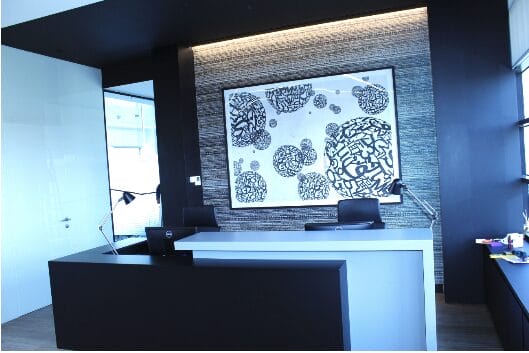
Jaume Plensa
is one of those artists whose work you already know even if you don’t know his name
He’s best known for large-scale public sculptures—serene, elongated human heads and seated figures, often with closed eyes—installed in cities around the world. Think monumental, meditative, and quietly dominant rather than flashy.
The edition work above features Language and text – letters from multiple alphabets forming bodies or skins of the globes.

Jose Croft
José Pedro Croft is one of the most prominent figures in contemporary Portuguese art, widely credited with helping spearhead the revival of Portuguese sculpture from the 1980s onward. Born in Porto and educated in Lisbon, Croft began his artistic career rooted in painting before increasingly turning to sculpture and three-dimensional work.
Across sculpture, painting, and works on paper, Croft probes visual perception, leveraging form and reflection to create dynamic spatial dialogues.


Pablo Picasso
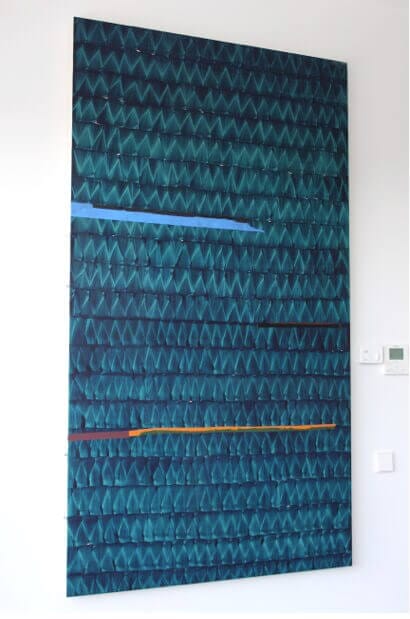
Juan Usle
With a keen awareness of tonality, Juan Uslé thoughtfully explores the concept of color; however, he does not aim for intense chromatic effects. Instead, the gradations in his work often reflect the Spanish countryside of his upbringing. The interplay of light and shadow serves as a consistent motif, generating a fleeting resonance, reminiscent of sunlight filtering through Venetian blinds or a distant horizon.
These rhythmic abstractions grow from the line which is sometimes applied at speed and with spontaneity or evolves slowly and deliberately as the brush is moved by hand at each heartbeat across the canvas. The artist prepares the paint in his studio in daylight, but the paintings themselves are often created at night when the ambient silence allows him to listen to his body. The vertical marks could be read as intervals between the pulse; they make it visible and remind us of the importance of our own sensory and experiential capacity.
Uslé’s nuanced artwork evokes profound atmospheres or environments. His paintings do not carry a narrative impulse; rather, they seek to encapsulate time—moments from the past and present are merged within a single luminous image crafted from broad strokes or narrow bands of oil paint.

Eusebio Sempere
Hanging Mobile featured in 1965 survey of Optical Art Museum of Modern Art, NY
“The Responsive Eye” was a significant exhibition at the Museum of Modern Art (MoMA), New York, conducted from February 23 – April 25, 1965.
The emphasis of the exhibition was on Optical perception—an exploration of how the eye reacts to color, pattern, vibration, and illusion.
Still cited today,It Cemented Op Art in the public imagination and proved abstraction could be visceral, not just intellectual. MoMA positioned it as perceptual research, rather than a stylistic trend, yet it captivated the press and the fashion industry. Within a few months, Op Art was prominently featured on dresses, album covers, and advertisements.
Sempere was one of the key figures in postwar European abstraction, known for rigorously refined geometric compositions that explore light, vibration, and optical perception. His work sits at the crossroads of Op Art, Constructivism, and kinetic art

Miquel Berrocal
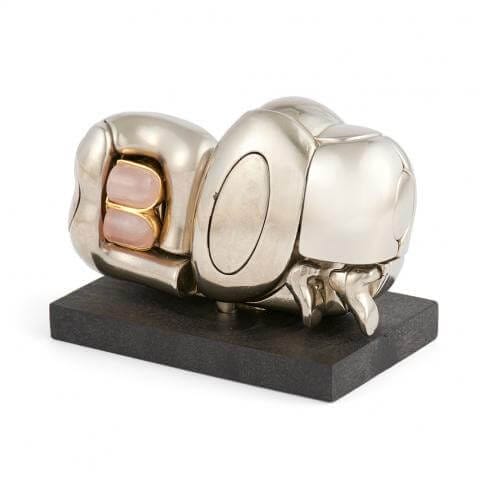
Spanish artist Miguel Berrocal is best known for his interactive sculptural works, which range in scale from the miniscule to the monumental, and depict abstract or figurative forms that can be assembled like puzzles. Fascinated from an early age by analytic geometry, science, and drawing, Berrocal quickly turned to sculpture after his schooling. Berrocal’s practice was driven by a strong personal philosophy highlighted by the desire to connect with the viewer through sculptural objects, leading to an analytical, complicated process of study and the construction of touchable works. Berrocal believed that in order to truly experience form, it must be “observed with the hands,” thus emphasizing the viewer’s role in the mental and physical construction of an artwork.